Peripheral Arterial Disease (PAD)
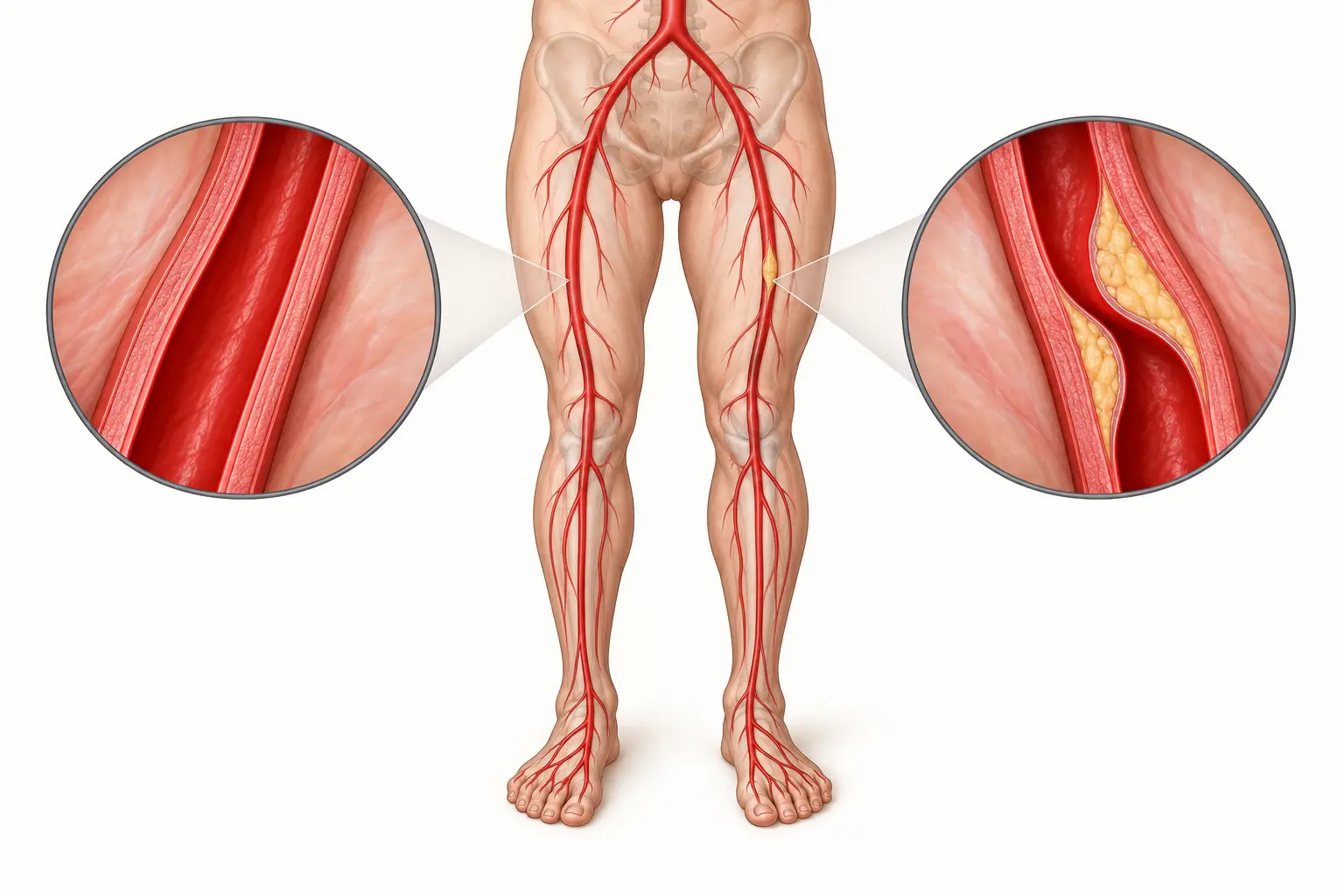
Peripheral arterial disease (PAD) occurs when narrowed or blocked arteries reduce blood flow to the legs. It may cause pain while walking, slow-healing wounds, colour change or, in advanced disease, pain at rest and tissue loss. Early vascular assessment can clarify the cause and help protect mobility and limb health.
Routine appointment contact is not an emergency service.
What is PAD?
PAD is usually caused by atherosclerosis, in which fatty deposits and inflammation narrow the arteries. The reduced blood supply may initially become noticeable only during walking. More advanced disease can cause persistent pain, wounds that do not heal or gangrene.
PAD is also an important marker of cardiovascular risk. Assessment therefore considers both the affected limb and measures that reduce the risk of heart attack and stroke.
Symptoms that may suggest PAD
- Cramping, aching, heaviness or tiredness in the calf, thigh or buttock during walking that improves with rest
- Reduced walking distance compared with before
- A foot that feels persistently colder than the other side
- Colour change, reduced hair growth or brittle toenails
- Weak or absent foot pulses
- A toe, foot or leg wound that is slow to heal
- Pain in the foot at rest, particularly at night or when the leg is elevated
- Blackening or gangrene of a toe or part of the foot
Not every patient has typical symptoms. Diabetes, neuropathy, limited mobility and other conditions can mask or alter the presentation.
Who is at increased risk?
Risk is higher with smoking or tobacco exposure, diabetes, high blood pressure, abnormal cholesterol, chronic kidney disease, increasing age, and established heart or cerebrovascular disease. A previous leg artery procedure also warrants continued vascular follow-up.
How PAD is assessed
Assessment begins with the history, pulse examination and inspection of both legs and feet. Depending on the clinical findings, tests may include:
ABI and physiological testing
The ankle-brachial index compares blood pressure at the ankle and arm. Toe pressures or other physiological tests may be useful when diabetes or calcified arteries make ABI results less reliable.
Arterial Doppler or duplex ultrasound
Ultrasound can identify reduced flow and estimate where significant narrowing or blockage is present.
CT angiography, MR angiography or catheter angiography
Detailed vascular imaging may be required when symptoms are severe, a wound is not healing or revascularisation is being considered. The choice depends on the clinical problem, kidney function and the treatment being planned.
Treatment is individualised
The appropriate plan depends on symptoms, wound status, anatomy, general health and patient priorities.
Risk-factor and medical treatment
Treatment commonly includes stopping tobacco exposure, control of diabetes and blood pressure, cholesterol-lowering therapy, antiplatelet or other vascular medication when indicated, foot care and an appropriate walking or exercise programme. Medicines should be selected after medical assessment rather than started from website information.
Supervised or structured walking
For suitable patients with walking-related symptoms, structured exercise can improve walking ability and quality of life. Exercise advice should be adapted when there is severe rest pain, tissue loss, infection or another condition limiting safe walking.
Endovascular treatment
Angioplasty, sometimes combined with stenting or other endovascular techniques, may be considered when symptoms remain limiting or when blood flow must be restored to support wound healing and limb salvage.
Open vascular surgery
Bypass or another open reconstruction may be appropriate for selected patients based on the location and extent of disease, available conduit, operative risk and expected durability.
PAD, diabetic foot and limb salvage
In a patient with diabetes and a foot wound, infection control and wound care alone may not be enough if blood flow is inadequate. Limb-salvage assessment brings together perfusion, wound extent and infection severity. Revascularisation may be considered when improved blood supply is needed to support healing.
When to arrange a vascular consultation
Arrange assessment if walking repeatedly causes calf, thigh or buttock pain; one foot is persistently colder; pulses have been described as weak; or a toe or foot wound is not improving. Rest pain, gangrene or a deteriorating wound requires prompt specialist evaluation.
Consultation in Bengaluru
Consult Dr Siddharth Matad, Vascular & Endovascular Surgeon, at Siddharth Vascular Clinic, United Hospital, Jayanagar, Bengaluru.
For routine appointments, call or WhatsApp +91 97465 53250, or use the Appointments page.
For emergency symptoms, go to the nearest emergency department. Do not wait for a routine appointment or a phone/WhatsApp response.
Frequently asked questions
Is leg pain while walking always caused by PAD?
No. Joint, spine, nerve and muscle problems can produce similar symptoms. The pattern of pain, pulse examination and vascular tests help distinguish poor arterial circulation from other causes.
Can PAD be treated without an operation?
Many patients are initially managed with risk-factor control, medication and structured exercise. A procedure may be considered when symptoms remain disabling or when reduced blood flow threatens tissue or wound healing.
What is an ABI test?
The ankle-brachial index compares blood pressure at the ankle with blood pressure in the arm. It is a useful initial test for reduced leg circulation, although additional tests may be required in diabetes or heavily calcified arteries.
Does every arterial blockage require a stent?
No. Treatment depends on symptoms, limb threat, anatomy and overall health. Options can include medical treatment and exercise, angioplasty, stenting, bypass surgery or continued observation.
Why is a non-healing foot wound evaluated for circulation?
Wounds require adequate blood supply to heal. When arterial circulation is reduced, wound care and infection treatment may need to be combined with vascular assessment and, in selected cases, revascularisation.
When is PAD an emergency?
Sudden severe limb pain with coldness, pallor or blue discoloration, numbness, weakness or loss of movement is an emergency. Rest pain, spreading tissue loss or gangrene also requires prompt assessment.
Vascular consultation in Bengaluru
Routine outpatient assessment is available with Dr Siddharth Matad, Vascular & Endovascular Surgeon, at Siddharth Vascular Clinic, United Hospital, Jayanagar, Bengaluru.
For emergency symptoms, go directly to the nearest hospital emergency department.