Chronic Limb-Threatening Ischemia (CLTI)
Chronic limb-threatening ischemia (CLTI) is an advanced form of peripheral arterial disease in which severely reduced blood flow causes persistent pain at rest, a foot or toe wound that is not healing, or gangrene. It threatens tissue and limb viability and requires urgent vascular assessment. Treatment may combine restoration of blood flow with infection control, wound care, pressure relief and medical optimisation.
Routine appointment contact is not an emergency service.
What is CLTI?
CLTI is a clinical syndrome caused by peripheral arterial disease together with ischemic rest pain, gangrene or lower-limb ulceration that persists because blood supply is inadequate. It is the most severe chronic presentation of PAD and is associated with a substantial risk of tissue loss, amputation, cardiovascular events and death.
CLTI is not defined by one pressure measurement alone. Symptoms, wound extent, infection, objective perfusion tests, anatomy, general health and functional goals are considered together.
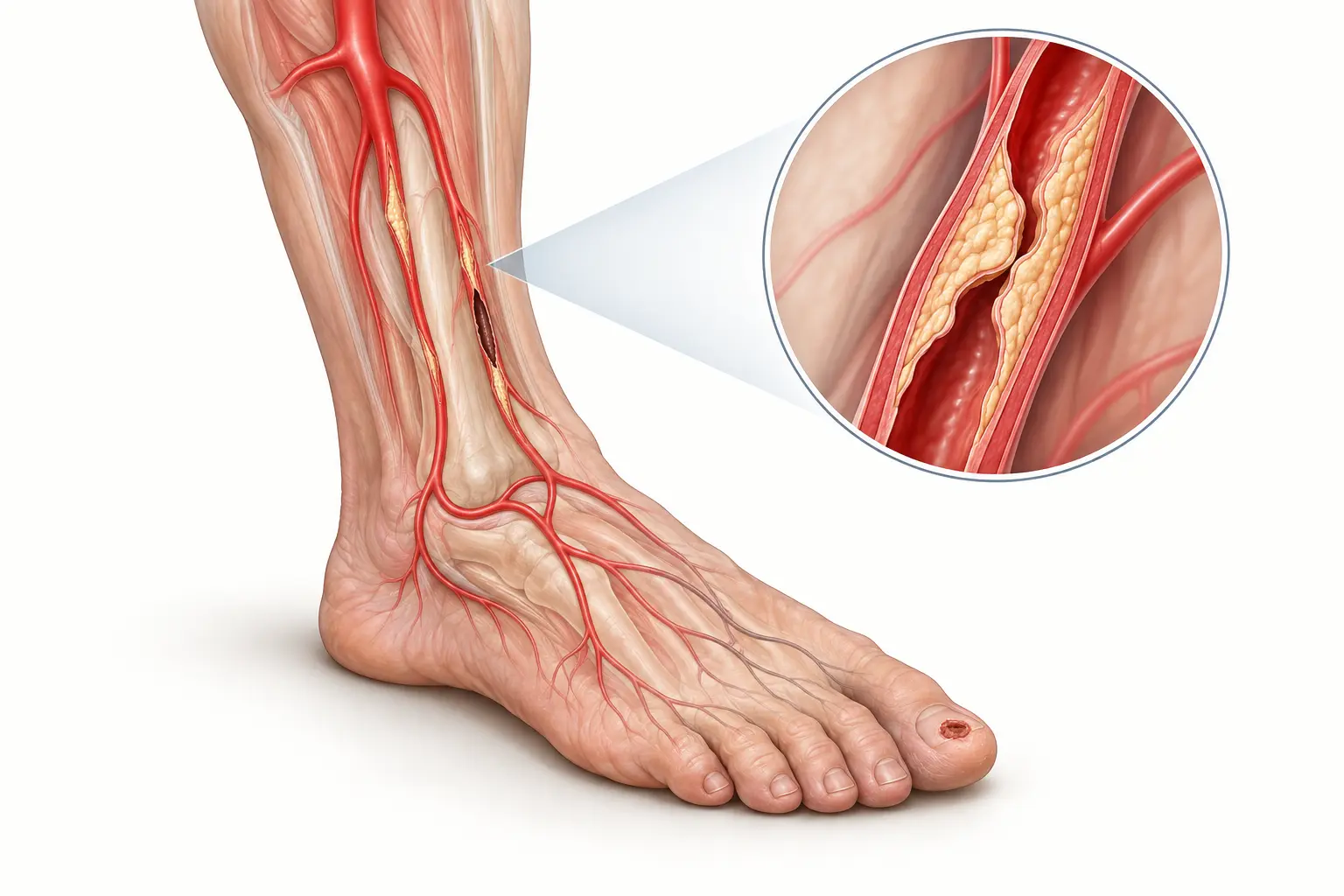
Symptoms and signs that may suggest CLTI
- Persistent pain in the forefoot or toes while resting, often worse at night or when the leg is elevated
- Temporary relief when the foot is placed down or the patient sits at the edge of the bed
- A toe or foot wound that is not healing
- Blackening, gangrene or progressive tissue loss
- A persistently cold or discoloured foot
- Weak or absent foot pulses
- Reduced sensation, particularly when diabetes or neuropathy is present
- Recurrent infection or wound deterioration despite appropriate local care
Pain can be reduced or absent in neuropathy. A painless wound in a person with diabetes does not exclude severe ischemia.
Why urgent assessment matters
Ongoing ischemia reduces oxygen delivery, limits infection control and prevents tissue repair. Delay can allow a small wound to deepen, infection to spread and salvage options to narrow. All patients with suspected CLTI should receive urgent vascular assessment rather than repeated dressing changes alone.
Urgent does not mean that every patient requires the same procedure. It means that perfusion, tissue threat, infection and overall patient risk should be assessed promptly so that an appropriate plan can be made.
How CLTI is assessed
Clinical examination
Assessment includes the history and pattern of rest pain, wound duration and progression, previous vascular procedures, diabetes, kidney disease, smoking or tobacco exposure, medication, mobility and functional goals. Both legs and feet are examined for pulses, temperature, colour, wounds, gangrene, oedema, deformity, neuropathy and signs of infection.
Objective perfusion testing
Tests may include ankle pressure and ankle-brachial index (ABI), pedal Doppler waveforms, toe-brachial index and absolute toe pressure. In diabetes, chronic kidney disease or arterial calcification, ABI can be falsely elevated or otherwise unreliable; toe pressure, Doppler waveforms, transcutaneous oxygen pressure or skin perfusion pressure may provide additional information.
No single test guarantees healing or determines treatment by itself.
Arterial duplex ultrasound
Duplex ultrasound evaluates flow and helps identify significant narrowing or blockage. It may guide the need for more detailed vascular imaging.
CT, MR or catheter angiography
Detailed imaging is used when revascularisation is being considered. The aim is to define the arterial pathway from the aorta to the foot, including below-knee and pedal vessels. The choice of CT angiography, MR angiography or catheter angiography depends on anatomy, kidney function, urgency and the intervention being planned.
WIfI: wound, ischemia and foot infection
The Society for Vascular Surgery WIfI system grades three components:
- Wound: the extent and depth of tissue loss
- Ischemia: the severity of reduced blood supply based on objective testing
- Foot infection: the clinical severity of infection
These grades are combined to estimate limb threat and help guide the potential benefit and urgency of revascularisation. WIfI is a clinician assessment; patients should not be asked to self-score from a website.
Limb-salvage treatment is coordinated
Limb salvage is not one procedure. The plan may include several parallel components selected for the individual patient.
Infection control and wound care
Clinically infected wounds require prompt treatment. Drainage, debridement, tissue sampling and antibiotics may be needed depending on severity. A clinically uninfected wound should not receive antibiotics simply to promote healing. Debridement and wound strategy must account for perfusion and the need for urgent source control.
Pressure relief and foot protection
Offloading reduces repetitive pressure, particularly in neuropathic plantar wounds. Footwear, casts or other devices are selected according to wound location, ischemia, infection and balance or mobility limitations.
Revascularisation
When inadequate arterial flow threatens healing or limb viability, revascularisation may be recommended to restore useful blood flow to the foot. Options include endovascular treatment, open bypass or a hybrid approach. The chosen strategy depends on patient risk, limb severity, arterial anatomy, available vein conduit, previous procedures and patient goals.
Endovascular treatment
Angioplasty, stenting or other catheter-based techniques may be suitable for selected disease patterns. Some patients require treatment at more than one arterial level. Technical success does not by itself guarantee wound healing; infection control, offloading and structured follow-up remain essential.
Open bypass surgery
Bypass may be preferred for selected patients when the anatomy, expected durability, operative risk and available vein conduit favour surgical reconstruction. It is not automatically superior for every patient.
Medical and cardiovascular optimisation
Management commonly includes antiplatelet and lipid-lowering therapy when indicated, blood-pressure and diabetes control, tobacco cessation, nutrition assessment, pain management and treatment of associated cardiovascular disease. Medicines must be individualised after clinical assessment.
When amputation may be considered
The aim is to preserve a functional limb when this is achievable and consistent with the patient’s overall health and goals. Not every limb can be salvaged. Amputation may be considered when tissue destruction or infection is extensive, revascularisation is not feasible or has failed, pain cannot be controlled, or the risks and burdens of reconstruction outweigh the likely benefit.
Except when immediate life-saving source control is required, major amputation decisions should follow vascular assessment of perfusion and reconstructive options. The appropriate level and timing are individualised.
Follow-up after treatment
Follow-up assesses pain, perfusion, wound size and depth, infection, offloading, graft or treated-artery status, medication and cardiovascular risk. Wounds should be measured objectively. Lack of progress should prompt reassessment of blood supply, infection, pressure and systemic factors rather than unstructured repetition of dressings.
When to arrange a vascular consultation
Arrange urgent specialist assessment for persistent rest pain, a non-healing toe or foot wound, gangrene, recurrent wound infection or suspected severe arterial insufficiency. A patient with diabetes, kidney disease or neuropathy may have advanced disease without typical pain.
For sudden coldness, pallor, severe pain, numbness, weakness, rapidly spreading infection or systemic illness, go directly to the nearest emergency department.
Consultation in Bengaluru
Consult Dr Siddharth Matad, Vascular & Endovascular Surgeon, at Siddharth Vascular Clinic, United Hospital, Jayanagar, Bengaluru.
For routine and urgent outpatient appointment requests, call or WhatsApp +91 97465 53250, or use the Appointments page.
For emergency symptoms, go to the nearest emergency department. Do not wait for a clinic reply.
Frequently asked questions
Is CLTI the same as ordinary leg pain while walking?
No. Intermittent claudication typically occurs during walking and improves with rest. CLTI involves pain while resting, non-healing tissue loss or gangrene related to inadequate arterial blood flow and requires more urgent assessment.
Can a black toe be treated without amputation?
Sometimes. The result depends on whether the tissue is viable, whether infection is present, the extent of arterial disease and whether blood flow can be improved. Even when a limited amputation is required, revascularisation may help the wound heal and preserve more of the foot or limb.
Why are toe pressures used in diabetes?
Diabetes and arterial calcification can make ankle arteries difficult to compress, producing a falsely high or unreliable ABI. Toe pressure, toe-brachial index and Doppler waveforms can provide additional information about distal perfusion.
What does limb-salvage treatment involve?
It may combine revascularisation, infection control, debridement, wound care, pressure relief, diabetes and cardiovascular management, rehabilitation and structured follow-up. The exact combination depends on the patient and limb.
Is angioplasty always possible?
No. Suitability depends on the location, length and calcification of arterial disease, available access, previous procedures and the overall limb-salvage plan. Open bypass or a hybrid procedure may be more appropriate in some patients.
Does every patient with CLTI need bypass surgery?
No. Treatment may be endovascular, surgical, hybrid or occasionally non-revascularisation care when procedure risk is excessive or reconstruction is not feasible. The decision considers patient risk, limb threat, anatomy and patient preference.
How quickly should rest pain or gangrene be assessed?
Suspected CLTI warrants urgent vascular assessment. Sudden deterioration, new neurological deficit, wet gangrene, rapidly spreading infection or systemic illness requires immediate hospital emergency assessment.
Can successful revascularisation guarantee wound healing?
No. Restoring blood flow is often necessary but healing also depends on infection control, pressure relief, wound care, nutrition, glucose control and the extent of tissue loss. Outcomes cannot be guaranteed.
Vascular consultation in Bengaluru
Routine outpatient assessment is available with Dr Siddharth Matad, Vascular & Endovascular Surgeon, at Siddharth Vascular Clinic, United Hospital, Jayanagar, Bengaluru.
For emergency symptoms, go directly to the nearest hospital emergency department.